BIRDING IN AUSTRALIA
How Bird Photography Shapes What We Value
How Bird Photography Shapes What We Value
And How a Single Snapshot Can Spark a Conservation Journey
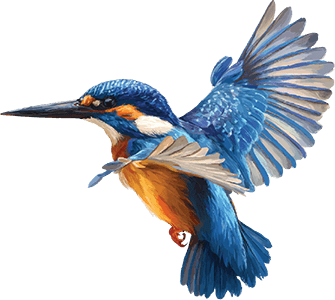
Bird photography has become one of the quiet engines behind modern birding. Scroll through any Australian birding group and you’ll see a familiar rhythm: fairywrens glowing electric blue, kingfishers catching the light just right, wedge-tails looking regal against a wide Outback sky. These images — beautiful, repeated, shared thousands of times — do something interesting: they gently shape which birds we notice, which stories we tell, and even which species we care about.
But there’s more to the story. Behind every glossy photo, there’s often a spark — a moment of connection — that can grow into something far deeper.
Why Certain Birds Dominate Our Screens
Let’s be honest: some birds are simply more photogenic than others.
Fairywrens practically pose. Kingfishers look like someone cranked the saturation to 200%. Galahs have the comedic timing of seasoned entertainers.
These species rise to the top on social media not because they are more important, but because they are easier to photograph beautifully. They sit out in the open. They’re colourful. They glow in good light.
Meanwhile, some of Australia’s most threatened birds — the subtle ones, the canopy skulkers, the cryptic specialists — rarely go viral. Try snapping a half-decent image of a nightjar and you’ll understand why.
This imbalance in visibility can shape public awareness. The birds that flood our feeds become the ones people think represent Australian birdlife, even though the quiet, plain, or reclusive species may need our attention more.
And yet…
The Beauty of the First Photo: Where Caring Begins
A simple photo — even an over-sharpened, phone-camera zoomed, slightly wonky one — can be someone’s entire entry point into birding.
Maybe it’s a red-capped robin caught by accident.
Maybe it’s a kookaburra in the backyard.
Maybe it’s a lorikeet they didn’t know wasn’t actually a rainbow lorikeet but a red-collared one (Darwin residents know the difference!).
That one image becomes a tiny hinge. Curiosity swings open.
“What bird is this?”
“Where does it live?”
“What does it eat?”
“What else is out there?”
This is the foundation of conservation: interest.
Interest leads to learning.
Learning leads to care.
And care leads to… everything else.
None of this is trivial. None of this is frivolous. A bird photo can be a seed.

From Armchair Birder to Active Participant
There’s a gentle but fascinating progression that plays out every day online:
- Someone joins a Facebook bird group.
- They start liking photos.
- They ask for help identifying their own photos.
- They buy binoculars.
- They go on their first birding walk.
- They start submitting checklists, joining surveys, or supporting conservation campaigns.
Bird photography is often step one.
That might sound melodramatic, but it’s not. Across Australia, thousands of people are becoming birders not through field guides or formal education, but through casual digital encounters.
A fairywren photo may be pretty — but the impact can be profound.
How Social Media Actually Helps Conservation
Social media gets a bad reputation, sometimes deserved. But in the birding world, it has quietly become one of the most effective modern conservation tools.
Here’s how:
- It puts bird knowledge in everyone’s pocket.
Even people who never thought twice about birds now recognise species by sight.
- It normalises curiosity.
Asking “What bird is this?” is no longer something only biologists do.
- It makes people care about local wildlife.
Not just in national parks — but in their streets, gardens, and schoolyards.
- It builds community.
Birders have always been generous sharers of tips, sightings, and stories. Social media just gives them a bigger room.
- It amplifies conservation messages.
A post about a threatened species reaches more eyes — and potential supporters — than ever before.
- It documents real trends — and unites huge audiences.
Photos, posts, and shared sightings help track movements, breeding events, seasonal changes and unusual behaviour. But social media also brings people together around real-time wildlife stories.
Just look at the Melbourne Peregrine Falcons: thousands of people tuned in to watch the eggs hatch, then returned day after day to follow the chicks’ growth, squabbles, meals, and finally their first flight. For many, it was their very first deep connection to a wild bird — and it happened not in a forest or a field, but through a shared moment online.
These digital gatherings create awareness, empathy, and a sense of collective guardianship. Social media doesn’t just record what birds are doing — it helps people care about what happens next.
Far from replacing traditional birding, social media often strengthens it.
The Other Side of the Lens
Of course, there is complexity here.
When the birds that photograph well become the birds we talk about most, there’s a risk that the quieter, plainer species remain invisible.
When AI can create images so realistic that even experts pause, authenticity becomes a conversation.
When likes and shares shape behaviour, ethics matter more than ever.
But these challenges simply mean we must pair beauty with honesty, artistry with care, and wonder with responsibility.
Beauty as a Guide, Not a Distraction
Bird photography doesn’t just capture birds — it captures attention.
And attention is the first step to protection.
So yes, the fairywrens, kingfishers, and kookaburras will keep stealing the show.
But every photo — even the blurry ones — has the power to open a door.
A door into learning.
A door into awareness.
A door into conservation.
Because sometimes it only takes one picture, one bird, one moment — to turn a passer-by into a protector, and an armchair observer into someone who steps outside, looks up, and starts caring a little more about the feathered world we share.
Story © Birding in Australia
Bird Images © Petra Hughes
(unless otherwise stated)
Please don’t copy, reproduce, or use any of the images or stories on Birding in Australia in any form without written permission.